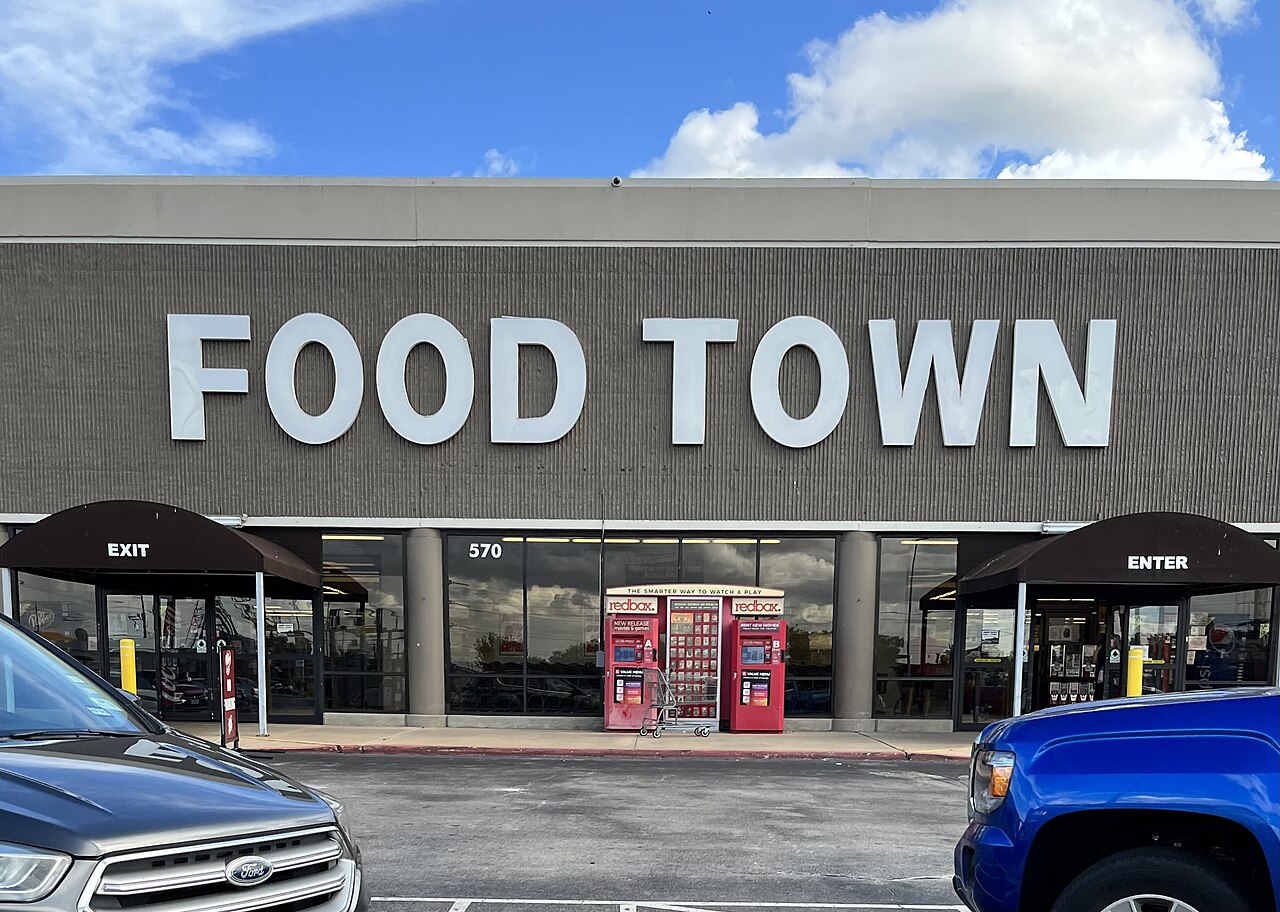

Lewis Food Town: From One Store in 1994 to 26 Across Houston

Food Town was founded in 1994 by Ross Lewis and six associates with a simple mission: offer national brands, quality meats, and fresh produce at competitive prices. The first store opened in Pasadena that April, and the company grew fast, reaching two dozen stores in under a decade and acquiring Houston’s longtime Gerland’s chain in 2015.
Ross Lewis passed away in December 2020, and younger generations of the family have carried the legacy forward — Clay among them. The quality of their work hasn’t escaped notice.
In 2023, the Houston Business Journal named Food Town an honoree in its inaugural Family-Owned Business Awards. And earlier this year at the NGA Show in Las Vegas, The Shelby Report named the company one of its Exceptional Independents — an award for independent grocers whose innovation, dedication, and community leadership set them apart.
But there was still room for improvement. Before taking over IT, Clay spent time working in the stores, getting a feel for the different positions and how each one touches technology. By his read, the labor system was one of the bigger things holding the company back in efficiency.
The Challenge
Food Town had used FMS’ Labor Saver for years. On paper it did the job. In practice, Food Town had spent almost as many years building workarounds for the things it couldn’t do.
Part of the problem was rigidity. Food Town was, as Clay put it, “kind of stuck into how [Labor Saver] wanted you to do things.”
Scheduling was where most of the inefficiency lived. Schedules were published in Labor Saver but never built there, so the real work first happened in two or three sprawling Excel files before getting re-keyed by hand.
Nothing was connected: the schedule was created in one place, the hours were tracked in another, and the sales and labor numbers managers needed to make decisions lived somewhere else.
Employees had no app, either. Schedules were web-only, which meant calling the store on a Friday and asking someone to walk over, photograph the schedule, and text it back. Time-off requests ran on “sticky notes and phone calls and emails,” with no audit trails or reminders.
Then came the hardware bill.
“We were going to have to upgrade all our time clocks, and it was going to be two and a half grand per clock. And spending that much money on just hardware with no new software features, nothing … it’s still just a fingerprint reader and a tablet in a case.”
To be fair to the old system, Clay was careful not to overstate the case against it: looking at its base feature set, “it did what it was supposed to do.” It had simply stopped being worth what Food Town would have had to pay to keep it.
The Solution
Clay had known about TimeForge for years — he’d come across it while researching what other grocery retailers were using.
His verdict:
“With TimeForge we saved money on the time clocks. We get triple — probably — the amount of features and different use cases we can do on TimeForge versus Labor Saver. So that was kind of a no-brainer.”
What sealed it was customization — the ability to shape the system around Food Town’s needs, instead of the reverse.
Clay admitted there was a lot to absorb at first, but it was worth it once it clicked. What made that possible was having something to learn from:
“Having the extensive documentation available in TimeForge was amazing, because we didn’t have anything like that for Labor Saver. I never even got trained on Labor Saver — it just kind of became tribal knowledge on how Labor Saver worked.”
Setup ran across multiple meetings with TimeForge support, including two sessions spent going through the new configuration options at their disposal. By the end, Food Town had worked out exactly how they wanted to run going forward — and they now had the tools to do it their way, down to their own day-one and week-one guides in a binder at every store.
The rollout was deliberate: a sandbox to work through the basics, three pilot stores running both systems side by side for a few weeks, and the rest of the chain converted in three waves. Clay said the only thing he’d change was getting the pilot stores live sooner.
By the final waves, the switchover was almost routine: managers trained, employees enrolled, old clocks down and new clocks up on a Sunday morning.
The Result
Food Town is now fully off Labor Saver across all 26 stores — including the corporate office, which clocks in through TimeForge’s web link with no time-clock hardware at all.
Scheduling, which used to take some managers five or six hours a week, saw one of the biggest improvements.
“It shouldn’t be taking a manager that long to do it. And now it’s cut down to less than three hours — that’s like on the maximum. If there’s no real big changes or anything, it’s 30 minutes to an hour, tops.”
Managers build the schedule once, in TimeForge, rather than building it in Excel and keying it in somewhere else. They reuse templates and adjust for time-off and vacation instead of starting from scratch.
Food Town also tried the sales forecasting and auto-scheduler in the pilots, where one store took to it — mainly for cashier scheduling, the spot where matching people to volume is hardest.
Sales and labor reporting is the piece Clay singled out as his favorite.
Under Labor Saver, that data sat apart from the schedule and the punches. With TimeForge, it’s all in one platform, which means a manager can see how labor is tracking against sales while there’s still a shift left to do something about it.
“That’s probably my favorite part — just having those sales and labor metrics immediately accessible.”
Managers now have the sales, the schedule, and who’s clocked in — and they can monitor it all from their phones anytime, anywhere.
Clay recalled how, when training started, the younger and more tech-savvy managers’ eyes lit up. He thought, “Okay, this is what they were looking for.”
Each store used to track certifications independently, with different certs routed to different supervisors depending on the type. Now everything lives in one place for all 26 stores — easier for supervisors and department managers, and by Clay’s account it has “increased our compliance across the board.”
What’s Next for Lewis Food Town
TimeForge’s applicant tracking system (ATS) is Food Town’s next big rollout — and getting ready for it turned up something nobody had planned on. Preparing to run new hires through the ATS meant taking a hard look at an employee handbook the company had let sit: did they really want everybody signing that old version?
The answer sent them back for major revisions, which has driven real policy change. Food Town is still working through the handbook, with the ATS rollout to follow once it’s done.
Clay’s advice for other grocers making the same move is short: “Get your pilot up ASAP.” Everything clicks from there, he says, and the rest of the process goes a lot smoother.