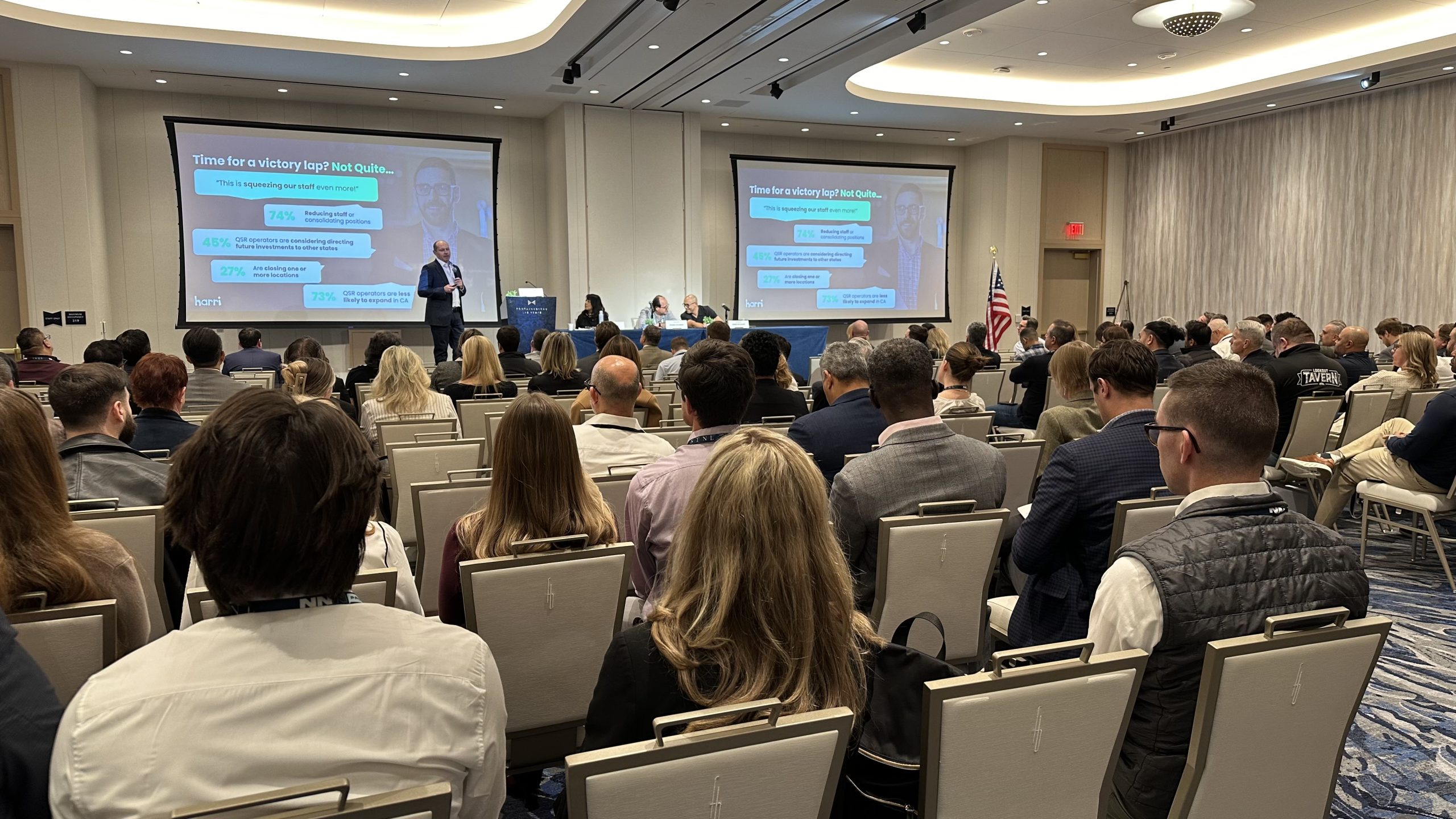
At the Restaurant Finance and Development Conference (RFDC) 2024, one session stood out as a wake-up call for restaurant operators: California Screaming. Moderated by Nancy Luna, contributing writer for Food on Demand, this discussion addressed the realities of California’s new $20 minimum wage and its impact on the restaurant industry.
The panel featured insights from industry leaders navigating this new normal:
- Luke Fryer, CEO of Harri
- Cosme Fagundo, McDonald’s franchisee
- James McGehee, Dave’s Hot Chicken
Together, they explored strategies for not only surviving but thriving in a higher-wage restaurant environment.
The Challenge of the $20 Minimum Wage
California’s wage hike represents a significant shift, with ripple effects likely to extend beyond the state’s borders. For many operators, this change raises tough questions about managing labor costs, maintaining profitability, and sustaining employee satisfaction.
But as the panelists highlighted, challenges often spark innovation.
Key Strategies for Success
- Invest in Proactive Labor Management
Luke Fryer emphasized the importance of leveraging technology to optimize labor efficiency. Workforce management platforms like Harri (and TimeForge) enable operators to streamline scheduling, monitor costs in real-time, and adjust labor strategies dynamically. Technology is no longer optional – it’s essential for navigating wage pressures. - Empower Your Team
Both Cosme Fagundo and James McGehee shared how they’ve invested in their teams to drive productivity and retention. From enhanced training programs to fostering a culture of open communication, prioritizing employee engagement has helped them offset some of the increased costs associated with higher wages. - Redefine the Customer Experience
James McGehee noted that investing in a better customer experience can create room for premium pricing, helping to absorb increased labor costs. Operators must focus on delivering value that customers recognize and are willing to pay for. - Plan for the Future
The panel agreed: wage increases are unlikely to stop at $20. Preparing for a future where labor costs continue to rise is critical. This includes automation, menu engineering, and exploring additional revenue streams to mitigate risks. - Leverage Productivity Metrics
Many operators still use labor percentages and sales per labor hour (SPLH) as metrics for labor, but neither are true productivity metrics. Instead, look for true productivity metrics … tickets per hour, entrees per hour, etc… From a competitive perspective, remember that other industries (c-stores and grocery) are trying to come get the peak sales, so work around that.
The California Effect
While this session focused on California, the lessons are relevant to operators across the U.S. As wage pressures mount in other markets, the strategies discussed at RFDC provide a roadmap for adapting and thriving.
Looking Beyond Minimum Wage
The $20 minimum wage isn’t just a challenge – it’s an opportunity for innovation and growth. By investing in technology, empowering employees, and refining operations, restaurant leaders can turn this hurdle into a competitive advantage.
Are you ready for the future of labor in the restaurant industry? Let’s discuss strategies that can help your business thrive in this evolving landscape.